
Interactive Brokers & Trading 212 in Belgium: Tax Guide
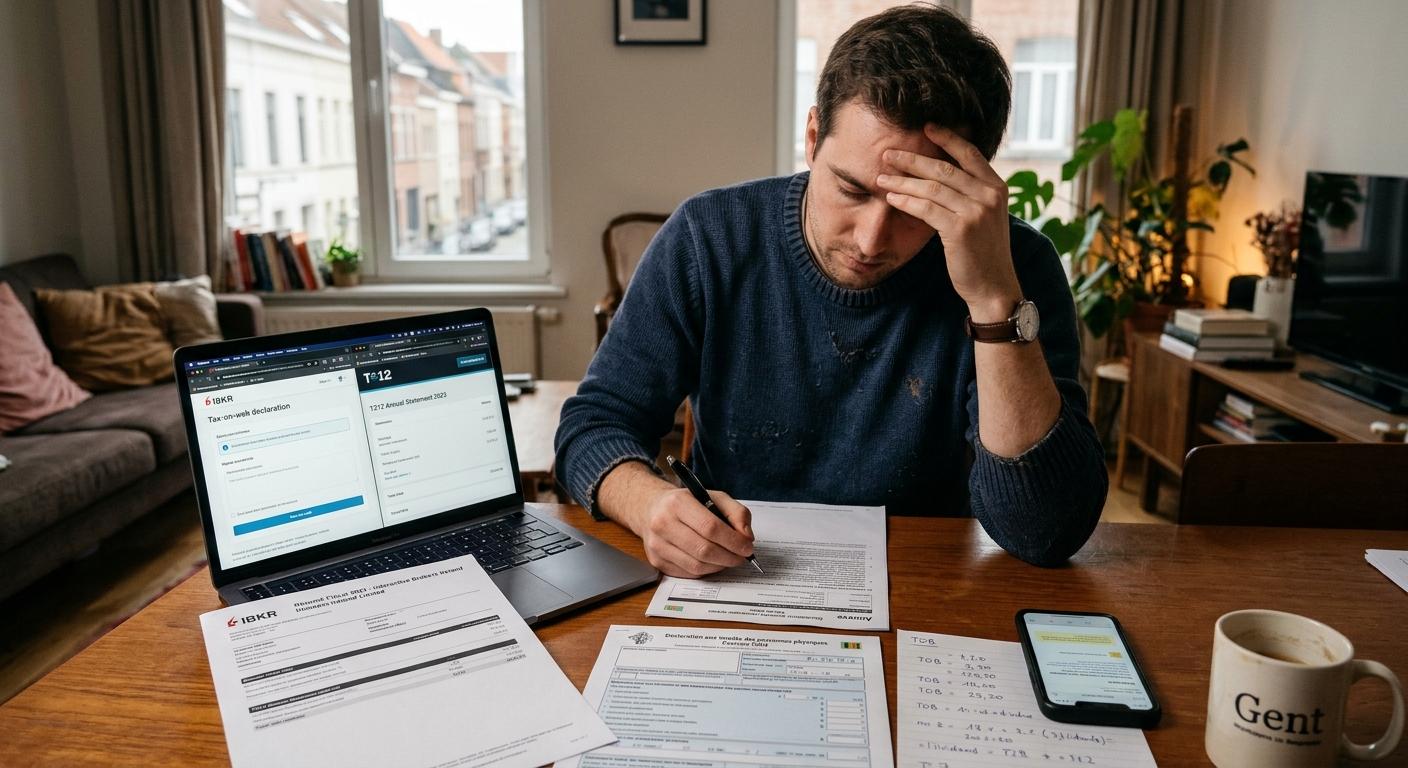
Interactive Brokers and Trading 212 in Belgium: the tax headache (and how to fix it)
Published on Financiux.eu, clear finance for those who live and invest in Belgium.
Rock-bottom commissions, thousands of products, an app that works beautifully. Interactive Brokers and Trading 212 are two of the names that come up most when someone looks for somewhere to invest in Europe. And then you move to Belgium, or you already live here, and you discover the small print: neither of them takes the tax work off your hands. What looked cheap turns into a list of calculations, filings and deadlines that land on you.
In this Financiux.eu guide we explain what happens with each platform, which obligations you have to meet yourself, where most people slip up and how to organise things so the paperwork doesn't eat your returns.
First things first: can you use Trading 212 in Belgium?
It's the question almost nobody asks before opening an account. According to the specialist reviews consulted as of October 2026, Trading 212 currently does not accept new clients resident in Belgium, and it's the only EU country where this happens. The company keeps a waiting list with no published date, and some residents who opened their account before the block still keep it.
This creates three different situations:
- You live in Belgium and want to open an account: today, according to those sources, it isn't possible. Before you try, check the current situation on the platform's website, because this policy may change.
- You already had an account before you moved: if you're an expat who arrived with an account from another country, you become a Belgian tax resident and all the obligations below kick in, even if the platform doesn't remind you of them.
- You change your residence in the platform: updating your country of residence can affect the terms of your account. Check with the broker's support team, and don't leave your details out of date: misreporting your residence isn't a solution.
If you already hold an account, what follows matters especially to you. And if you're still choosing a broker, it will help you understand the real cost of each option.
Interactive Brokers: powerful, cheap and with homework
Interactive Brokers (IBKR) is the option comparison sites usually point to as the main alternative for Belgian investors with a more advanced profile. Its platform is built for trading across many markets and products, but that power comes at a cost in time: according to specialist reviews, the investor resident in Belgium must handle the TOB, dividend tax and the Reynders tax themselves, on top of reporting the account to the National Bank of Belgium.
Put another way: the broker executes your orders, but you take on the role of "accountant".
The five obligations left in your hands
With IBKR, and with Trading 212 if you keep an account, these are the tasks that, according to the sources consulted, the platform doesn't handle. Always check with your broker whether anything has changed.
1. The TOB: declare and pay every month
The TOB is the Belgian tax paid on purchases and sales. If your broker doesn't withhold it, you have to calculate it, declare it and pay it yourself, at these rates: 0.12% (bonds and distributing funds), 0.35% (shares) and 1.32% (accumulating funds), each with its own cap per transaction.
According to the FPS Finance, payment must be made no later than the last working day of the second month following the transaction, and since 14 July 2025 the return is filed online via MyMinfin. You'll find the full process in our guide on how to fill in the TOB form step by step. And if you'd rather go over the basics, see what the TOB is in Belgium.
An important nuance for frequent traders: on platforms like IBKR it's easy to rack up dozens of transactions a month, and each execution counts separately. Doing it by hand stops being practical, so it's worth automating with a spreadsheet or with the Financiux.eu TOB calculator.
2. Dividend tax
In Belgium, dividends are generally taxed with a 30% withholding. Belgian brokers apply it automatically. With a foreign broker that doesn't withhold it, you must declare that income in your annual tax return, under movable capital and property. There's a limited annual exemption and certain particularities when tax has already been paid in the dividend's country of origin, so check the current conditions with the FPS Finance or an adviser.
3. The Reynders tax
This is the obligation that surprises people most. When you sell units in certain funds, the capital gain may be subject to a 30% withholding. It generally applies to funds whose portfolio holds at least 10% in bonds and cash. With a Belgian broker it's withheld at the time of sale. With a foreign one that doesn't do it, you have to work out whether your fund is affected, calculate the base and declare it.
4. The foreign account: National Bank and annual return
We covered this in the expat guide on declaring foreign accounts in Belgium, but it bears repeating: you must report the account to the Central Contact Point of the National Bank of Belgium and mention it every year in box XIII of your tax return. They're two separate procedures and both are mandatory. If you close the account, you must report that too.
5. Other taxes that depend on your wealth
- The securities account tax: it only affects large fortunes, with a threshold of one million euros in average value. On foreign accounts, the return and the payment are down to you.
- The capital gains tax: Belgium has introduced a 10% tax on certain financial capital gains, with exemptions and conditions. The rules keep evolving, so always confirm the current legislation with the FPS Finance.
Summary: what the broker does and what you do
| Obligation | Belgian broker | Interactive Brokers / Trading 212 |
|---|---|---|
| TOB | Withholds and pays it | You handle it, every month |
| Dividend withholding | Applies it | You declare it, every year |
| Reynders tax | Withholds it | You calculate and declare it |
| Foreign account (NBB) | Not applicable | You report it |
| Mention in the tax return | Not applicable | You do it, every year |
The table reflects the information available from specialist sources as of October 2026. Broker policies can change, so check the current terms with your platform.
How to organise things so it doesn't overwhelm you
The key isn't a good memory, it's a good system. This schedule works well for most investors:
- Every month: download your broker's transaction history, calculate the TOB on each purchase and sale, file the return on MyMinfin and pay before the deadline.
- When opening or closing an account: report it to the Central Contact Point.
- Once a year: gather the dividends received, the fund sales affected by the Reynders tax and the details of your foreign accounts, and review them before filling in your tax return.
A practical tip: always keep the proof of each return and payment in a folder, and export your broker's activity reports in a format you can process, such as CSV. Broker reports can contain errors too, so never take a figure for granted without checking it.
The product you choose changes the tax cost
Another lesser-known headache is that two ETFs with the same exposure can have very different tax costs.
- Distributing versus accumulating: a distributing ETF usually has a TOB of 0.12%, while an accumulating one can reach 1.32%. With regular purchases, the difference adds up.
- The fund's registration matters: according to specialists, if any of a fund's compartments is registered in Belgium, the authorities may treat all compartments as registered, which affects the applicable rate. That's why an ETF's classification isn't always obvious from its name.
- Check the KID before buying: the key information document and the product sheet are the first place to look. If doubt remains, ask a tax adviser.
What if I don't want all that paperwork?
It's a fair question. If the admin burden tires you, you have several options:
- A Belgian broker, or one with a presence in Belgium, that withholds the TOB and the other taxes for you. Commissions may be somewhat higher, but you save time and reduce the risk of mistakes.
- A foreign broker that withholds the TOB automatically, as we saw in the DEGIRO vs Trade Republic in Belgium comparison, although you'll still have the foreign account and dividend obligations.
- Simpler portfolio: fewer trades and fewer products mean fewer returns to file.
There's no one right answer for everyone. What is universal is this: choose a broker based on total cost, not just commissions, and count your time as part of that cost.
What happens if you don't comply
The consequences are real and can be expensive. A late TOB return brings fines that pile up by the week, and failing to report your foreign accounts can lead to penalties and longer review periods. We cover it in detail in our article on fines for paying the TOB late. If you realise you've forgotten something, regularise it as soon as possible and consult an adviser if several tax years are involved. This content is for information only and doesn't replace personalised tax advice.
FAQ
Can I open a Trading 212 account if I live in Belgium?
According to the sources consulted as of October 2026, no: the platform doesn't accept new clients resident in Belgium. Check its website before you try, because the policy may change.
Does Interactive Brokers withhold the Belgian TOB?
According to specialist reviews, no: the investor resident in Belgium must calculate, declare and pay the TOB themselves. Check the current terms with the platform.
Do I have to report my Interactive Brokers account to the National Bank of Belgium?
Yes. It's a foreign account, so you must report it to the Central Contact Point and mention it every year in your tax return.
What if I already had a Trading 212 account before moving to Belgium?
Once you become a Belgian tax resident, your obligations kick in: TOB, dividends, Reynders tax and reporting the account. Contact the broker's support team to find out the terms linked to your change of residence.
Is a Belgian broker better than a foreign one?
It depends on your profile. A Belgian broker saves you work and reduces the risk of mistakes. A foreign one may offer different commissions and products, at the cost of more management on your side.
Conclusion: cheap doesn't always mean easy
Interactive Brokers and Trading 212 are attractive platforms, but in Belgium the cost of an investment includes the time and risk of managing your own taxes. The good news is that it can all be kept under control with a system: a monthly schedule for the TOB, an annual one for dividends and accounts, and products chosen with care.
If you already trade with a foreign broker, start today with the most urgent part: calculate your pending TOBs with the Financiux.eu calculator, file whatever applies on MyMinfin and check that your accounts are reported. And to keep your ideas clear on tax and investing from Belgium, explore the rest of the guides on Financiux.eu.